by Alexander Sedov | May 17, 2021 | Posters for INI2021, Posters for INI2021 – 4b. Threats for aquat. Biodiversity (groundwater)
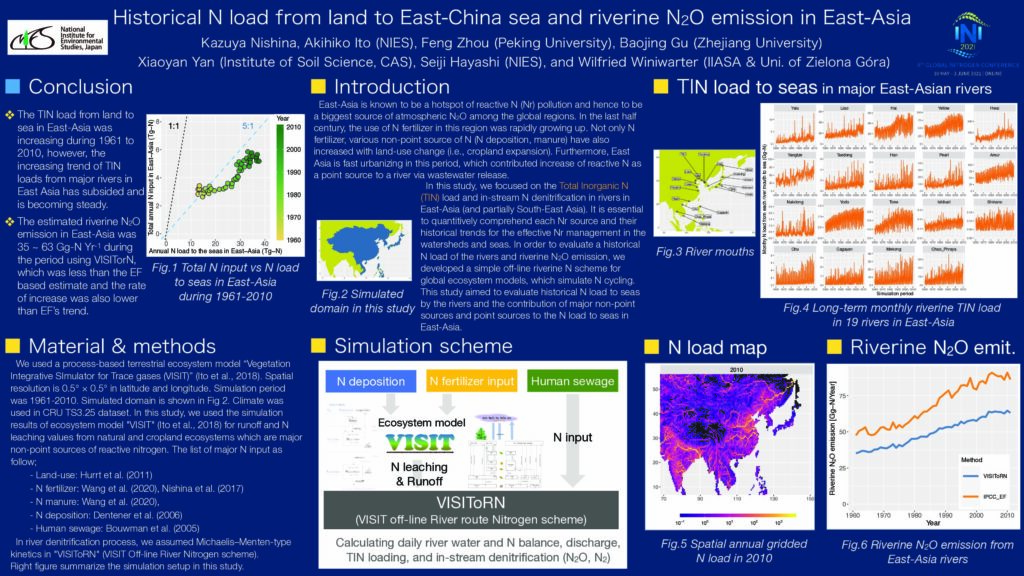
Historical N load from land to East-China sea and riverine N2O emission in East-Asia East-Asia is known to be a hotspot of reactive N (Nr) pollution and hence to be a biggest source of atmospheric N2O among the global regions. In the last halfcentury, the use of N...
by Alexander Sedov | May 17, 2021 | Posters for INI2021, Posters for INI2021 – 4b. Threats for aquat. Biodiversity (groundwater)
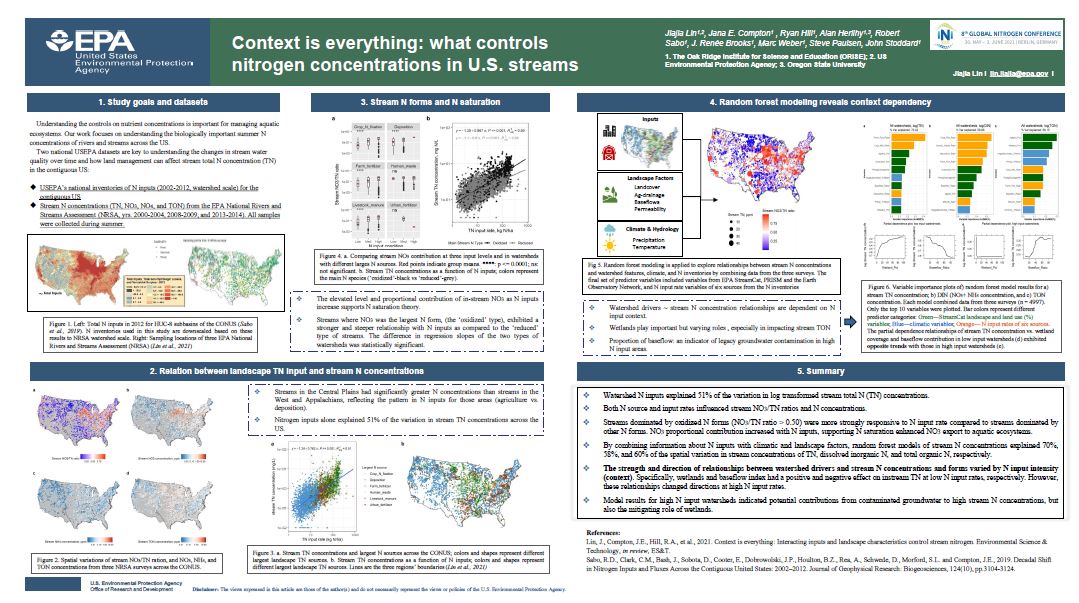
Context is everything: what controls nitrogen concentrations in U.S. streams Understanding the controls on nutrient concentrations is important for managing aquaticecosystems. Our work focuses on understanding the biologically important summer Nconcentrations of...
by Alexander Sedov | May 17, 2021 | Posters for INI2021, Posters for INI2021 – 4b. Threats for aquat. Biodiversity (groundwater)
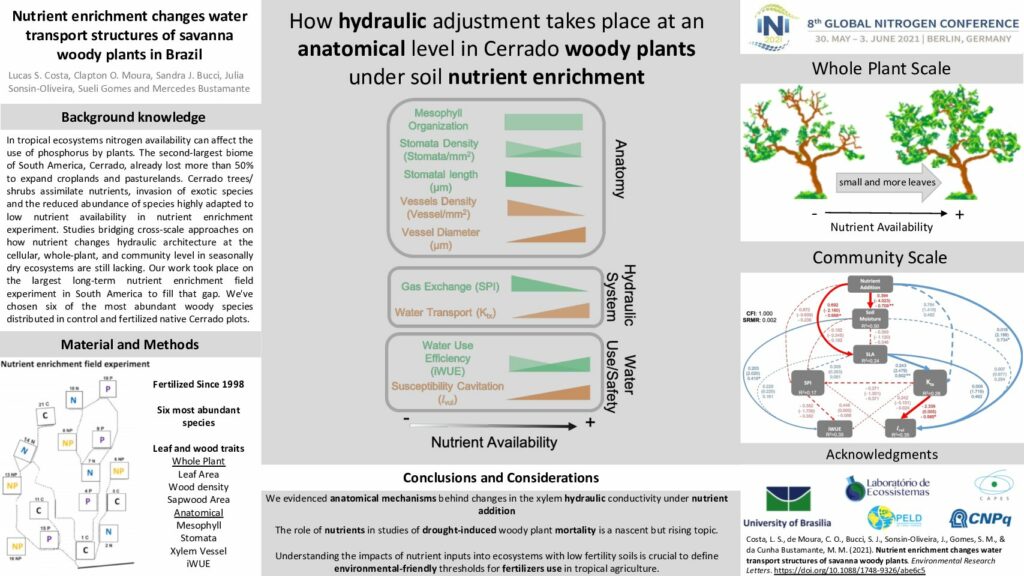
Nutrient enrichment changes water transport structures In tropical ecosystems nitrogen availability can affect the use of phosphorus by plants. The second-largest biome of South America, Cerrado, already lost more than 50% to expand croplands and pasturelands....

by Alexander Sedov | May 17, 2021 | Posters for INI2021, Posters for INI2021 – 4b. Threats for aquat. Biodiversity (groundwater)
Regionalized nitrogen fate in freshwater systems on a global scale Excessive nitrogen (N) use in agriculture, together with industry and household waste, is releasing N throughout the environment, causing eutrophication in both freshwater and coastal areas. To...
by Alexander Sedov | May 17, 2021 | Posters for INI2021, Posters for INI2021 – 4b. Threats for aquat. Biodiversity (groundwater)
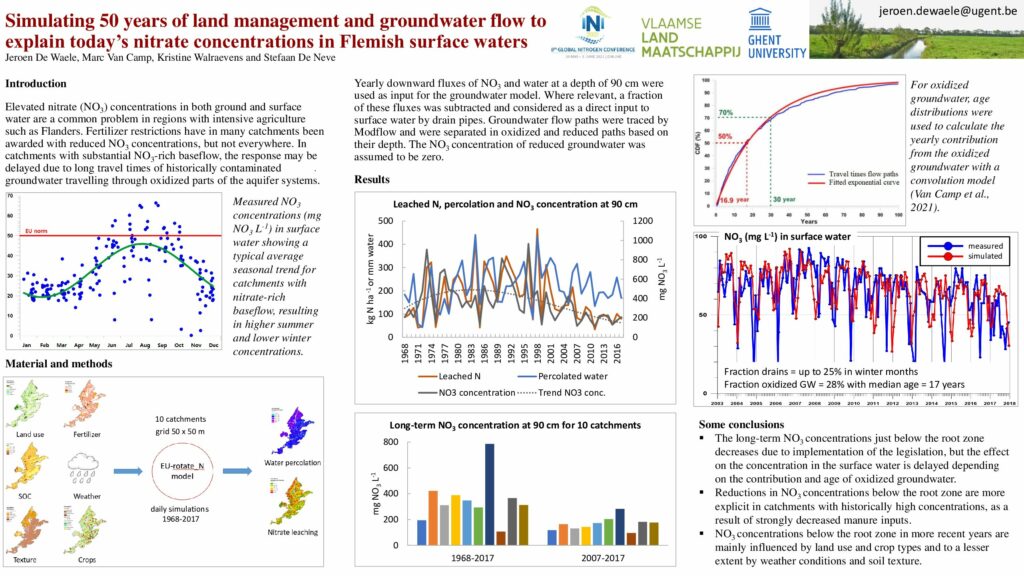
Simulating 50 years of land management and groundwater flow Elevated nitrate (NO3) concentrations in both ground and surface water are a common problem in regions with intensive agriculture such as Flanders. Fertilizer restrictions have in many catchments been...

by Alexander Sedov | May 16, 2021 | Posters for INI2021, Posters for INI2021 – 2b. Nitrifications & inhibitors; microbes
Changes of soil microbes related with carbon and nitrogen cycling Rising atmospheric CO2 concentration may lead to an increased input of available C from plants to the soil through rhizodeposition and may affect soil microbes with implications for the interaction...