
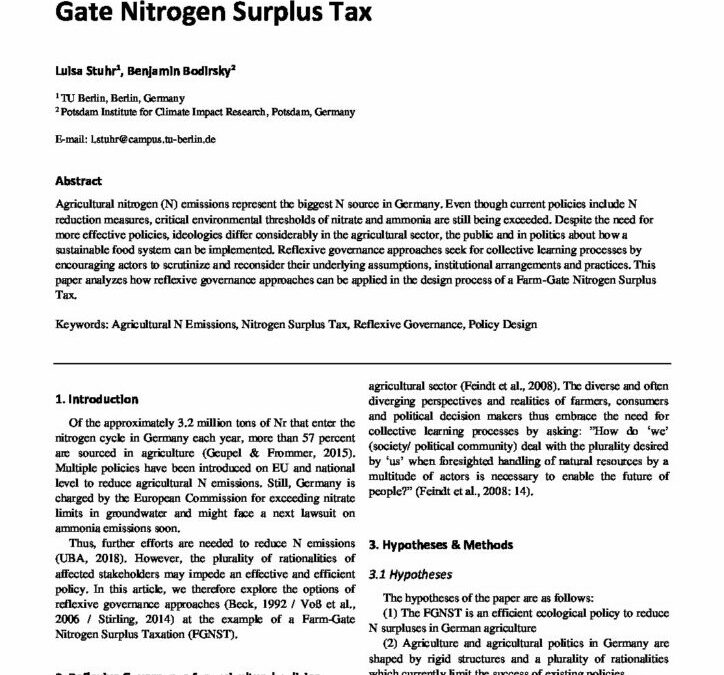
A reflexive policy approach for designing a FarmGate Nitrogen Surplus Tax
Agricultural nitrogen (N) emissions represent the biggest N source in Germany. Even though current policies include N reduction measures, critical environmental thresholds of nitrate and ammonia are still being exceeded. Despite the need for more effective policies,...

Developing a global economic valuation function for nitrogen impacts on coastal and marine ecosystem
The ecological and economic importance of coastal and marine systems is widely recognised. Yet, excessive nutrient loads can lead to eutrophication, impair ecosystem services (ES), and cause significant economic costs. This work reviews existing studies to develop a...
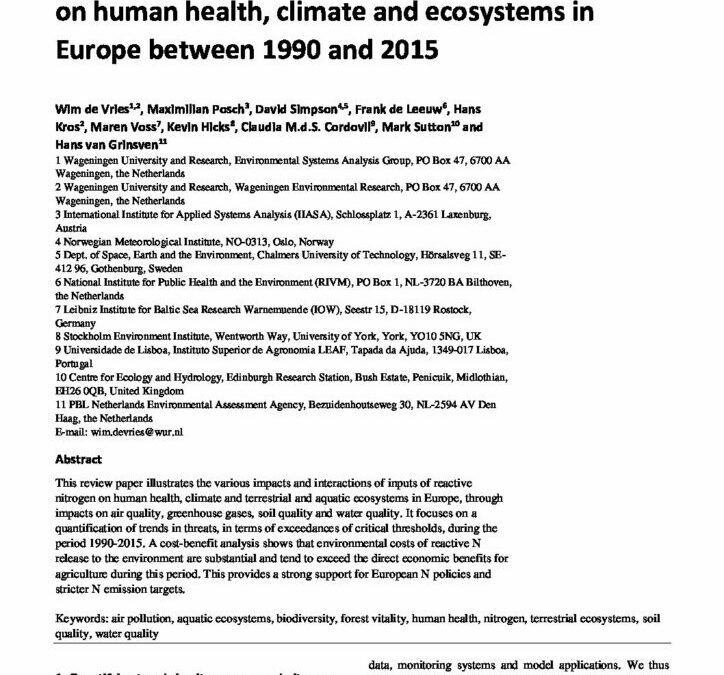
Trends in nitrogen induced costs due to impacts on human health, climate and ecosystems
This review paper illustrates the various impacts and interactions of inputs of reactive nitrogen on human health, climate and terrestrial and aquatic ecosystems in Europe, through impacts on air quality, greenhouse gases, soil quality and water quality. It focuses on...
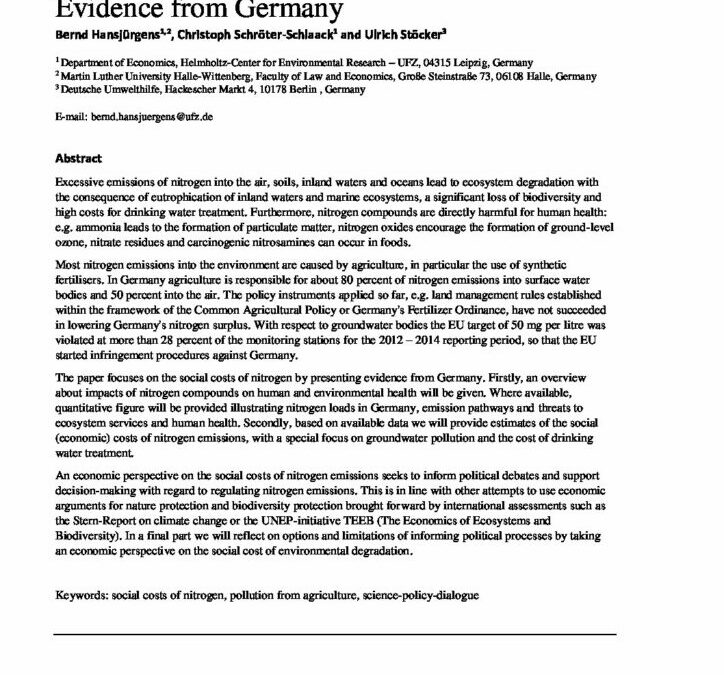
The Social Cost of Nitrogen: Evidence from Germany
Excessive emissions of nitrogen into the air, soils, inland waters and oceans lead to ecosystem degradation with the consequence of eutrophication of inland waters and marine ecosystems, a significant loss of biodiversity and high costs for drinking water treatment....

Cost-benefit analysis of reactive nitrogen for Germany
Besides of direct benefits from applying nitrogen fertilizer, such as enhanced crop yields, excessive release of reactive nitrogen to the environment by human activities is associated with numerous impacts on ecosystems, climate and human health. Our cost-benefit...
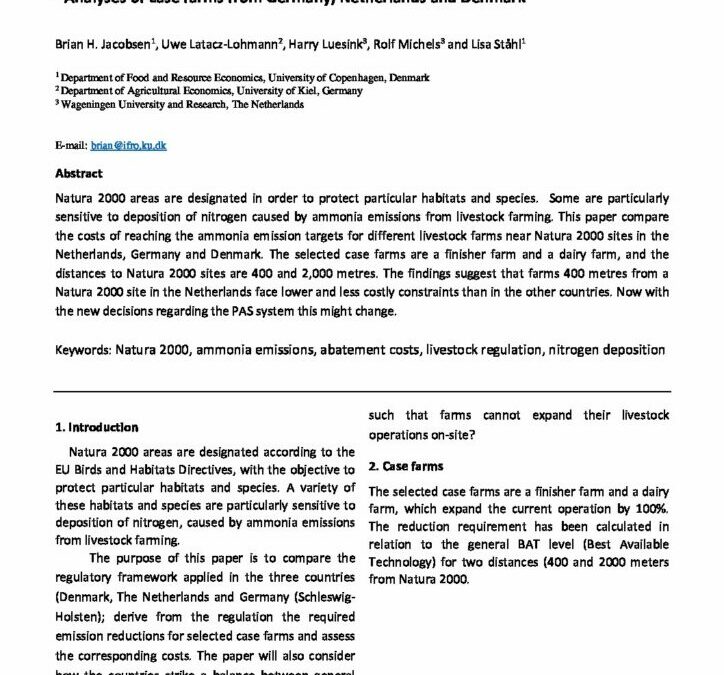
Costs of regulating ammonia emissions from livestock farms near Natura 2000 areas
Natura 2000 areas are designated in order to protect particular habitats and species. Some are particularly sensitive to deposition of nitrogen caused by ammonia emissions from livestock farming. This paper compare the costs of reaching the ammonia emission targets...
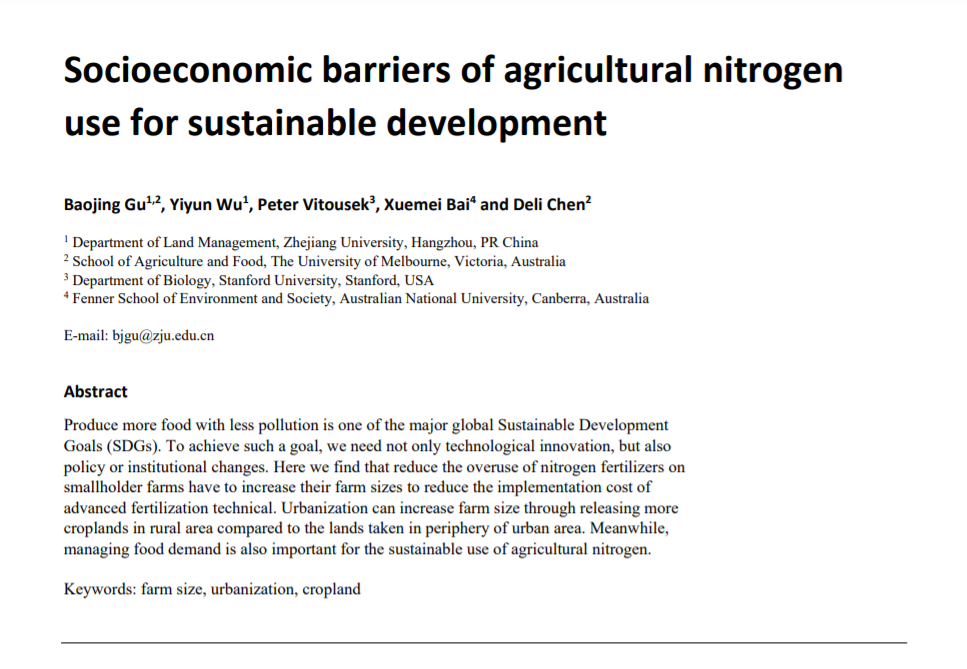
Socioeconomic barriers of agricultural nitrogen use for sustainable development
Produce more food with less pollution is one of the major global Sustainable Development Goals (SDGs). To achieve such a goal, we need not only technological innovation, but also policy or institutional changes. Here we find that reduce the overuse of nitrogen...

Plasma treatment of dairy slurry increases grass yields and nitrogen use efficiency
N2 Applied have developed a plasma treatment technology which enriches the nitrogen content of animal slurries and digestates whilst simultaneously reducing NH3 and CH4 emissions. Nitrogen Enriched Organic fertiliser (NEO) was applied to field plot trials in...
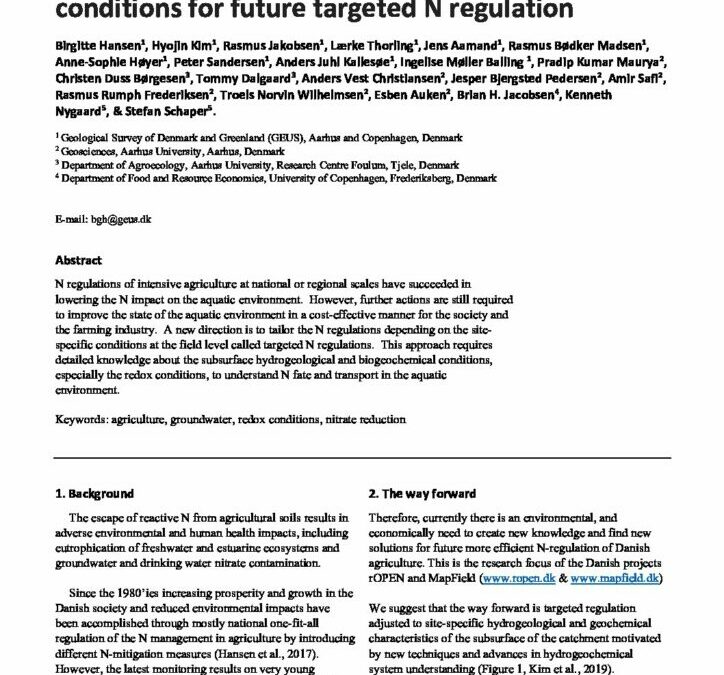
Innovative explorations of subsurface redox conditions for future targeted N regulation
N regulations of intensive agriculture at national or regional scales have succeeded in lowering the N impact on the aquatic environment. However, further actions are still required to improve the state of the aquatic environment in a cost-effective manner for the...
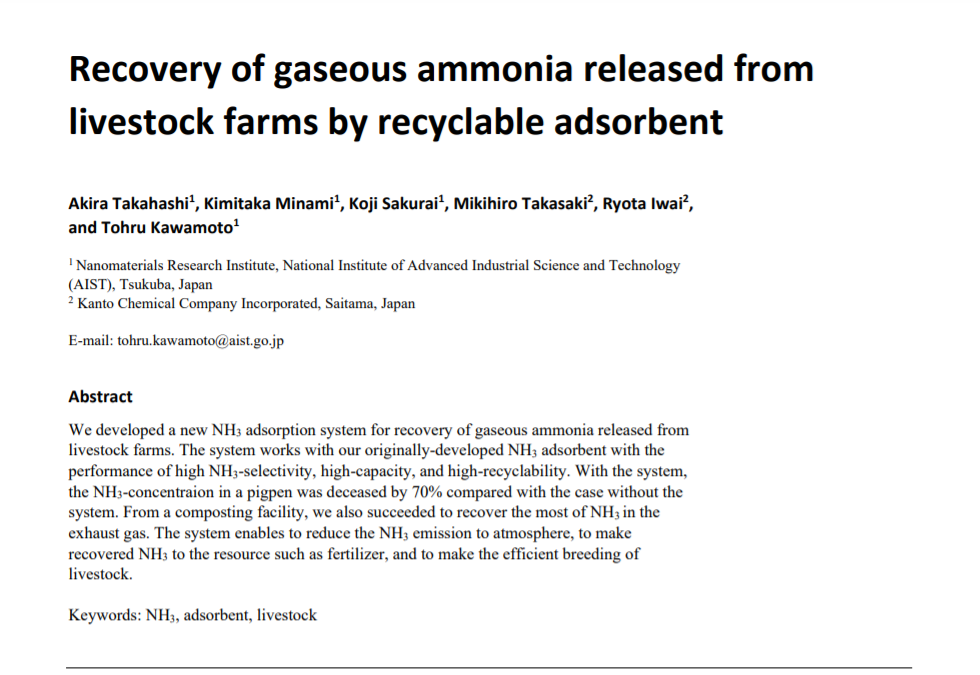
Recovery of gaseous ammonia released from livestock farms by recyclable adsorbent
We developed a new NH3 adsorption system for recovery of gaseous ammonia released from livestock farms. The system works with our originally-developed NH3 adsorbent with the performance of high NH3-selectivity, high-capacity, and high-recyclability. With the system,...